The decline of the convertible: What went wrong?
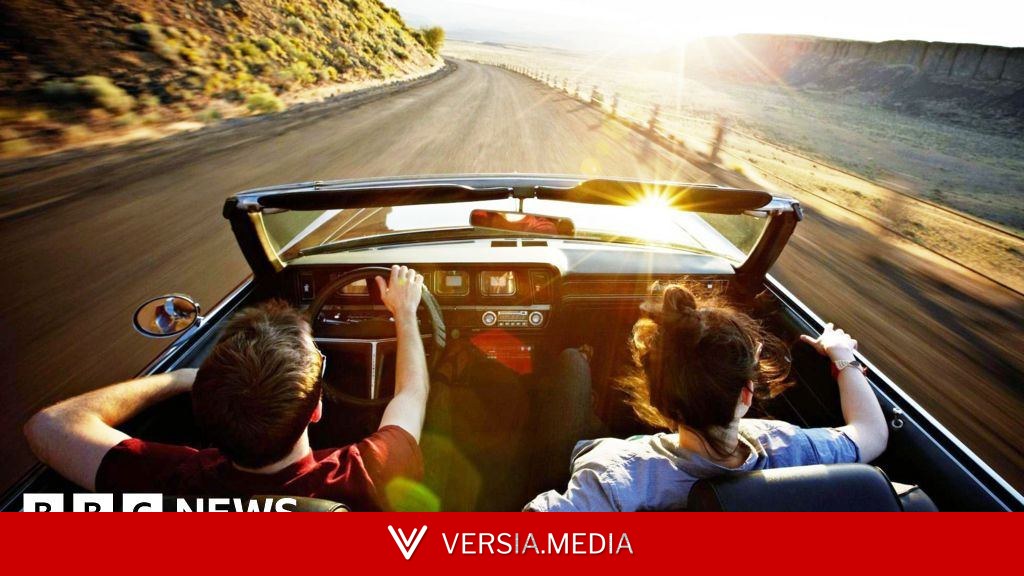
Elegance, independence, defiance, or simply the pure delight of driving along an open road with the breeze in your hair. The convertible car once embodied all these qualities. Yet, over the last twenty years, sales have plummeted, and its future appears highly uncertain. So, what has gone amiss?
During the 1950s and 60s, owning a convertible signified you possessed flair. They were the vehicles that the famous figures of that era were spotted in.
For instance, when Hollywood legends Grace Kelly and Cary Grant were depicted gliding along the French Riviera in a gorgeous, sleek Sunbeam Alpine in *To Catch a Thief*, they represented cinematic grace and sophistication.
Later movies such as *The Graduate* and *Thelma & Louise* helped solidify the convertible's status as a representation of escape and defiance for fresh generations.
For a period, convertibles were what individuals dreamed of purchasing, and manufacturers were eager to produce them.
Yet today, the convertible is becoming a rarity in the UK.
Over the past two decades, sales of new open-top vehicles have dropped by nearly 90%, from 109,171 in 2005 to just 11,484 last year, according to the Society of Motor Manufacturers and Traders.
That decline has coincided with a significant surge in Sports Utility Vehicles, or SUVs – large cars that bear at least a slight resemblance to four-wheel-drive off-road vehicles. Last year, they accounted for 59% of car sales across Europe, according to research firm Dataforce GmbH.
SUVs certainly enjoy the kind of celebrity endorsement that convertibles once had. Big is also flashy, and today, high-end models such as the Lamborghini Urus, the Mercedes-Benz G Wagon, or the Bentley Bentayga are widely favoured by contemporary reality TV stars, footballers, and music artists.
What SUVs provide is some of the style and image of a convertible without the drawbacks that an open-top car creates, says Steve Fowler – a leading automotive journalist and founder of the car review website Carblah.
"It's a straightforward reality of people desiring more practicality nowadays," he explains. "I often say SUVs are sports cars for individuals who can no longer have sports cars. They possess that kind of image that a convertible perhaps once had.
"And it's very challenging to fit the kids, the dog, the bike, and everything else we have in our lives into a convertible."
Whether it's due to the rise of the SUV or not, demand for open-top cars has decreased – and that makes manufacturers reluctant to produce them.
"It costs a huge amount of money to build any car these days," explains Fowler. "And it's not as straightforward as simply removing the roof... with safety regulations and everything else, you know, there's a lot of effort that goes into constructing a convertible."
Philip Nothard, insight director of Cox Automotive Europe, agrees. "It's a very clear supply and demand marketplace," he says. "Convertibles are more expensive to manufacture, for a very small market share."
One outcome of this is that there are now relatively few convertible models available on the market, and those that are on offer tend to be premium designs, because these provide higher profit margins.
The Mazda MX-5, the Mini Convertible, and the Fiat 500 are exceptions, but customers seeking affordable soft-tops now have limited choices.
Nevertheless, the open-top car still has its dedicated enthusiasts.
"It's the closest thing I can get to a motorcycle," says former biker Peter West, who drives a 2014 Mazda MX-5.
"It's the feeling of freedom. When you're in traffic, you can hear the birds... it's just the driving experience."
"Everyone is too focused on SUVs these days," says Steve Bassett. Like Peter, he's a loyal member of the Yorkshire Ridings branch of the MX-5 Owners Club. "I think people should be able to return to the simple, elegant roadster."
Will they make a comeback?
It's important to remember that the last rites for the convertible have been recited before. In the 1970s and 1980s, for example, sales dropped sharply as stricter safety regulations made them more expensive to build, while consumer preferences shifted towards high-performance hatchbacks. The growing prevalence of air conditioning, meanwhile, reduced part of the convertible's unique selling point.
Yet ultimately, sales did recover and reached new peaks in the early 2000s. So do convertibles have a future now? According to Philip Nothard, that will depend on reducing manufacturing costs, at a time when the auto industry is heavily focused on developing electric cars.
The manufacturers most likely to achieve this, he believes, are the Chinese firms currently entering the market.
"They can manufacture vehicles at much lower cost," he says. "So if you're someone who's passionate about convertibles and you want to see affordable models, it might be best to wait for the Chinese to take a larger share of the market."
There are currently only two convertible electric models for sale in the UK, and one of those is indeed built in China.
The MG Cyberster is a sleek, open-topped two-seater that appears to have been designed specifically to capitalize on the heritage of the once-British MG brand, famous for roadsters such as the MGA and MGB.
The question now is whether it remains merely a digital nod to the past, or heralds a new era of wind-in-the-hair motoring.
Get our flagship newsletter with all the headlines you need to start the day. Sign up here.