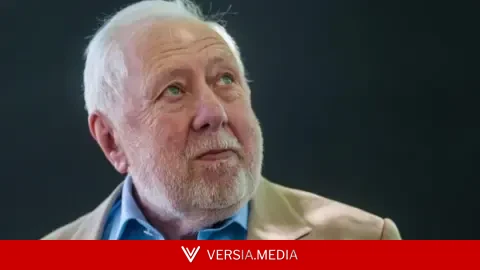
Roy Hattersley, who has passed away at the age of 93, was among the most intelligent and eloquent politicians in the post-war Labour Party.
Yet he was destined to spend over two-thirds of his career in opposition, attaining cabinet rank only briefly.
A moderniser before the phrase existed, he strongly resisted Labour’s move to the left following Margaret Thatcher’s 1979 victory.
As Neil Kinnock’s deputy leader during the 1980s, he urged his party to adopt multilateral disarmament, the market economy, and the European Union.
Consequently, they fended off the SDP’s challenge and set the stage for New Labour, which ultimately led to Blair’s landslide win in 1997.
Roy Sydney George Hattersley was born in Sheffield on 28 December 1932, into a family deeply rooted in Labour history.
His mother, Enid, who served a term as the city’s Lord Mayor, described herself as having been born into the party.
His father, also named Roy, shared her political ambition. He had previously been a Catholic priest—before leaving the church to elope with Enid, two weeks after marrying her to someone else.
Young Roy was a political campaigner in his early teens, distributing leaflets and canvassing door-to-door in support of local councillors and parliamentary candidates.
He earned a scholarship to Sheffield Grammar School and then attended the University of Hull to study economics, after a friend advised him it was a vital subject for any aspiring politician.
After leaving Hull, he briefly worked in a Sheffield steel mill and spent two years teaching in further education.
In 1956, he was elected to Sheffield City Council and served for a time as chairman of the housing committee.
But his political aspirations were focused on Westminster.
In 1959, he contested the Sutton Coldfield seat, failing to unseat the sitting Conservative MP as Harold Macmillan secured a landslide national victory.
Over the next three years, Hattersley unsuccessfully applied for 25 seats before being selected for the Conservative marginal constituency of Birmingham Sparkbrook.
In the October 1964 general election, Hattersley won the seat as Labour narrowly returned to power with a parliamentary majority of just four.
His career began slowly.
This was partly due to his earlier support for former Labour leader Hugh Gaitskell, who opposed unilateral disarmament and other policies cherished by the Trade Unions.
As a result, Harold Wilson kept Hattersley at a distance.
He got his first foothold when he was appointed parliamentary private secretary to pensions minister Margaret Herbison. But it was three years before he received his first ministerial role.
In 1968, Roy Jenkins and Tony Crosland urged Wilson to promote him, and he became an under-secretary of state at the Ministry of Labour, under the forthright Barbara Castle.
His first task was to help implement the unpopular Prices & Incomes Act, which aimed to keep wages down to control inflation.
At the same time, Castle was attempting to curb the influence of the Trade Unions.
She outlined her proposals in a White Paper, In Place of Strife. Among other measures, it proposed requiring a ballot before strike action could be taken.
A bitter row erupted in Cabinet, Castle’s plans collapsed, and Hattersley moved to the Ministry of Defence.
In 1969, he was required to sign the order sending British troops into Northern Ireland—while his boss, Denis Healey, recovered from a hospital visit.
Hattersley also disbanded the B Specials, the controversial reserve police force, replacing it with the Ulster Defence Regiment.
In the 1970 general election, he held his seat, but Labour was out of office, and he spent all but five of the next 27 years in opposition.
Hattersley was appointed shadow spokesman on foreign affairs and became a strong supporter of the Common Market.
He was one of 69 Labour MPs who voted with the Conservative government in favour of British entry—an issue that would divide the Labour Party for the next two decades.
When Labour regained power in 1974, Hattersley was made minister of state for foreign affairs.
His main task was renegotiating the terms of British membership of the EEC—the organisation that later became the European Union.
In 1976, he backed Jim Callaghan in the leadership election and was appointed secretary of state for prices and consumer protection—his final Cabinet post.
But three years later, Labour was swept out of power following the industrial unrest of the Winter of Discontent, and the Conservatives held office for the next 18 years.
Hattersley became shadow minister for the environment and helped organise Denis Healey’s unsuccessful leadership campaign.
But Labour was ideologically split down the middle, and it was the left-wing candidate, Michael Foot, who won.
Hattersley was appointed shadow home secretary.
Despite believing the Labour left was leading the party to oblivion, he refused to join many of his political allies who had left to form the centrist SDP.
In 1983, Labour stood on a left-wing manifesto and was heavily defeated.
In the aftermath, Hattersley ran for the leadership but lost to Neil Kinnock—and settled for the post of deputy leader.
Together, the so-called “dream ticket” worked to eliminate Militant—a Trotskyite far-left group—in an effort to make Labour electable again.
This meant discarding policies previously seen as party shibboleths, but victory remained out of reach.
After two election defeats, both Hattersley and Kinnock resigned.
They had rejected unilateral disarmament, accepted that Britain’s future lay in Europe, stopped short of full-throated support for the miners’ strike, and spoken favourably about the market economy.
But it had not been sufficient.
Hattersley backed John Smith in his successful leadership bid, but—having turned 65—left Parliament at the 1997 election.
He was made a life peer, Baron Hattersley of Sparkbrook, and—having done so much to pave the way for New Labour—quickly became one of its most outspoken critics.
“Blair’s Labour party is not the party I joined,” he declared and publicly supported Gordon Brown.
But when Brown finally entered No 10, Hattersley continued his criticism, claiming that Labour had managed to alienate all sections of society.
“By attempting to be all things to all voters,” he wrote, “it seems to have lost both its moral compass and its nerve.”
Away from Parliament, Hattersley was a prolific writer.
He published several autobiographical books, as well as biographies of John Wesley and William and Catherine Booth, the founders of the Salvation Army.
After widespread press coverage of an incident where his dog killed one of the Queen’s geese in St James’s Park, Hattersley produced Buster’s Diaries, supposedly written by the animal itself.
A devoted supporter of Sheffield Wednesday, he continued to write for newspapers and magazines and was a frequent political commentator on radio and television—where he was critical of both New Labour and the Tories.
After failing to honour several commitments to appear on the BBC’s topical quiz show, Have I Got News For You, he was once replaced by a tub of lard—something he took in good humour when he finally made an appearance.
He took the same relaxed view of his latex puppet on the satirical series Spitting Image, which mocked his slight speech impediment and sprayed saliva when it spoke.
In 2013, he separated from Molly, his first wife, after 57 years of marriage. Later that year, he married Maggie Pearlstine, his literary agent.
Five years later, he retired from the House of Lords—briefly re-entering the political fray after the Brexit referendum, when he helped campaign for a second vote.
Entering his tenth decade, he remained alert and politically engaged, opining that he thought Sir Keir Starmer would be a “steady” prime minister after the 2024 general election.
Hattersley once joked that Margaret Thatcher changed the political weather, and “it hasn’t stopped raining since”.
And because of her, he never had the chance to serve in one of the great offices of state.
It was hugely frustrating for him not to have been able to implement the policies he passionately believed in.
Instead, he will be remembered for reforming the Labour Party, when many like-minded colleagues left it.