To play this video you need to enable JavaScript in your browser.
This video can not be played
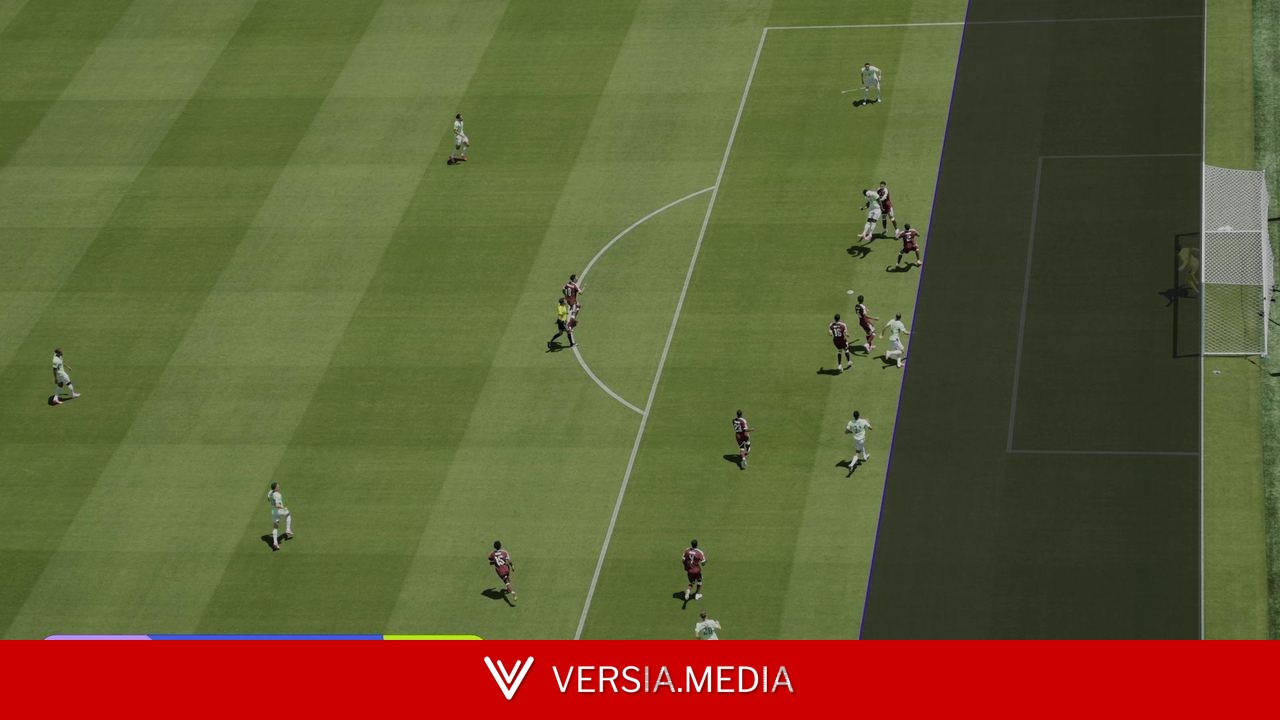
Was there an offside in build-up to Switzerland's penalty?
Published 13 June 2026
Was Switzerland's Remo Freuler offside before he was brought down by Qatar goalkeeper Mahmoud Abunada?
That is the question that, for many, remains unresolved despite Fifa eventually releasing images four and a half hours after the incident occurred.
The play resulted in a penalty, which Breel Embolo converted, as the teams ended in a 1-1 draw in Saturday's World Cup Group B match in Santa Clara.
Prior to the tournament, Fifa placed significant emphasis on its new, improved semi-automated offside system.
The world football governing body scanned every player at the World Cup to generate unique, realistic avatars.
It was intended to deliver the most precise illustration of offside calls we have ever witnessed.
But it malfunctioned, and Fifa had to fall back on drawing lines to the players and on the pitch.
Fifa issued a statement explaining that "a brief technical outage prevented the onside animation graphic from being generated".
It further stated that the lines drawn by the video assistant referee (VAR) indicated no offside and released two images—which remain unconvincing—but not the usual avatar graphics.
Within the sequence, two Switzerland players could potentially have been offside.
Fifa released an image for each as evidence they were onside. The first was for Embolo in the build-up, and the second for Freuler before he was fouled by Abunada.
Fifa's statement read: "The workflow of the VAR was not affected by this issue and followed the normal procedure in checking the on-field decision.
"The lines used by the VAR to check the position of the relevant players did not show the attacking player to be in an offside position in either of the two situations immediately before the penalty decision."
The semi-automated technology is not without flaws. It can be influenced by various factors, such as players being close together or even something as random as ticker tape on the pitch.
When the technology fails in the Premier League, there is the option to revert to the older method where the VAR draws the lines.
But the offside image is produced immediately, not several hours later.
"We all think [it was offside]," Gary Neville said on ITV before the statement was released.
"Everybody at home thinks it. Fifa are the host broadcaster and they have the semi-automatic decision that they can show us.
"There is a massive question over that because it is offside in my eyes until they prove to me different."
If there is one thing that is certain to create doubt, it is delay. It creates a vacuum that fuels conspiracy theories. It might give the impression Fifa is concealing something.
Fifa released two images - including this one - but not the avatar pictures
'Prove to us that it's offside'
"It's like a dictatorship," added Neville. "The idea that they hold this evidence internally and don't show fans of countries who are playing in tournaments is absolutely ridiculous.
"To not show the evidence of an offside - prove to us that it's offside! Show it straight away. Why not have transparency?"
We have seen the avatar animations in action in the opening games, and not just for overturned decisions.
We saw an example on Friday, with Tani Oluwaseyi flagged offside before Bosnia-Herzegovina goalkeeper Nikola Vasilj clattered into the Canada striker. Fifa provided the semi-automated animation, even though the VAR had not got involved.
It has been the same in decisions which are not close. In Saturday's later game Fifa quickly showed the graphic for Morocco goalscorer Ismael Saibari against Brazil even though there was no real question about him being in an offside position.
In general, Fifa has largely been very quick with offside decisions at this tournament.
With an audio alert sent to an assistant when a player is more than 10cm offside there is no need for a delayed offside flag.
The speed of this technology means the more obvious decisions are made quickly - but this was a tight one and was under the 10cm limit.
To play this video you need to enable JavaScript in your browser.
This video can not be played
Switzerland stunned by late Qatar equaliser
Related topics
Football
FIFA World Cup 2026
Qatar
Switzerland
Play BBC Sport's new World Cup predictor game Published 5 days ago
Play BBC Sport's new World Cup predictor game
Published 5 days ago
World Cup fixtures and group standings
World Cup fixtures and group standings
How to watch the World Cup on the BBC Published 6 June
How to watch the World Cup on the BBC
Published 6 June
Everything you need to know about the World Cup Published 1 April
Everything you need to know about the World Cup
Published 1 April