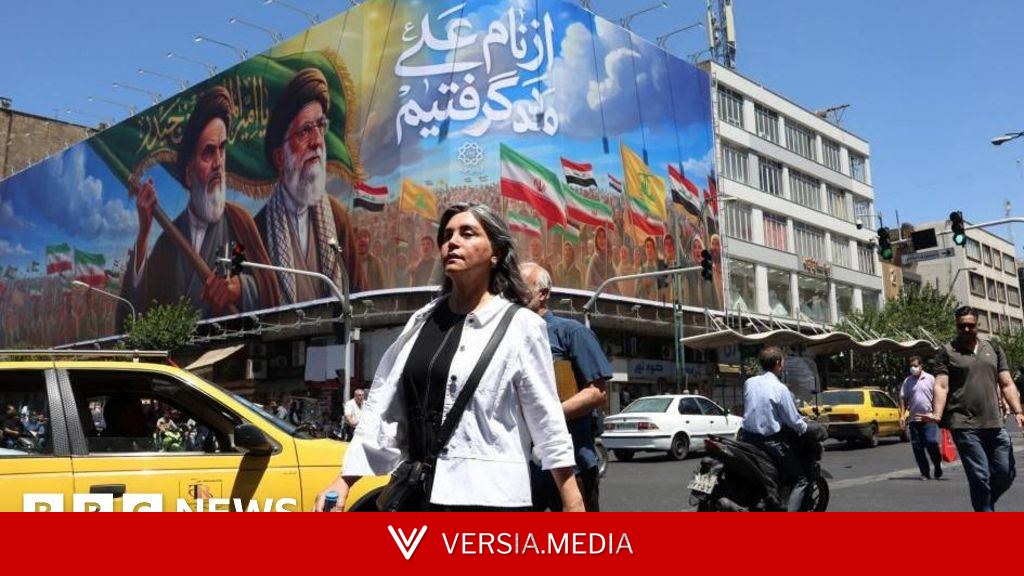
The conflict has been President Donald Trump's most significant foreign policy misstep to date.
It complicates America's ability to deter its adversaries.
It has strained its relationships with the oil-rich Gulf monarchies, whose reputation as stable havens amid the Middle East's chaos will require years to restore.
Behind closed doors, their officials already discuss shifting their loyalties and the need to learn to coexist with Iran, their neighbor across the water. China will have been monitoring closely as the United States depleted valuable weaponry and encountered the boundaries of its influence.
The deal, barring any last-minute complications, concludes a war grounded in America and Israel's miscalculation of their foe's strength in Tehran. This will bring tremendous relief to those whose lives have been disrupted by the fighting, beginning with civilians in harm's way.
The accord reopens the Strait of Hormuz, according to Trump, easing pressure on the global economy and the daily struggles of millions worldwide.
Thousands in the Middle East have lost their lives. Homes and businesses lie in ruins. The disruption to fertilizer production reliant on shipments through the strait could lead to hunger in poorer nations later this year, with sub-Saharan Africa especially vulnerable.
The agreement is not a peace treaty. The full document, described by negotiators as containing 14 points on two pages, has yet to be released. However, beyond reopening the strait, the memorandum of understanding extends the ceasefire and ends the U.S. Navy's blockade of Iranian ports.
It postpones the most challenging issues for future discussions. That agenda will cover Iran's nuclear program and the extent of sanctions relief it will receive in exchange for concessions.
A line has finally been drawn under the war that the U.S. and Israel initiated on 28 February.
Now rewind to 27 February, as American and Israeli forces readied for attack, loading their aircraft, briefing their teams, and setting target coordinates for their missiles.
In Geneva, Iran and the U.S. were engaged in what the world was told were critical talks to manage Iran's nuclear ambitions. Multiple sources have informed me and others that Iranian negotiators felt they were part of a genuine process and had presented both concessions and demands.
At the Gulf's entrance, the Strait of Hormuz was open, facilitating the transit of roughly 20% of the global supply of oil and natural gas, along with petrochemical byproducts essential to modern life, such as agricultural fertilizers and semiconductors.
The memorandum of understanding paves the way for nuclear negotiators to meet again and for ships to navigate the strait. That is precisely where matters stood 24 hours before the U.S. and Israel launched their war.
In the first of several devastating surprise attacks, Israel killed Iran's Supreme Leader, Ayatollah Ali Khamenei, and his closest advisors. Around the same time, a U.S. strike destroyed a school in Minab in southern Iran, according to multiple investigations. Over 150 civilians died, including at least 120 schoolchildren, predominantly girls under 12.
Both Trump and Israel's Prime Minister Benjamin Netanyahu appeared in videos to announce the start of a war they expected to be brief, decisive, and triumphant. It was a profound miscalculation.
Their addresses predicted the collapse of the Tehran regime. Instead, survival has fortified the regime. Its worst fear—a full-scale attempt at regime change by the U.S. and Israel—materialized and failed. The hardliners in Tehran who endured have emerged more confident.
Khamenei and his advisors were swiftly replaced by his son Mojtaba as supreme leader and a younger cadre of commanders, largely senior figures from the Islamic Revolutionary Guards Corps. They are equally ideological as the old guard but less cautious, willing to take risks in what they rightly saw as a battle for the Islamic regime's survival in Iran.
They fully executed a well-crafted strategy to shut the Strait of Hormuz and strike Iran's Arab neighbors, along with U.S. forces and bases, and Israel itself. The aggressive claims by U.S. Defence Secretary Peter Hegseth that American power had crippled Iran's military proved exaggerated and false.
Israel was America's full ally in the war. However, it was left out of the negotiations for the memorandum of understanding and views the deal with alarm.
Netanyahu stated on 28 February that he had awaited his entire political career for the chance to dismantle the Islamic Republic, which he considers Israel's most dangerous threat. Now he faces criticism from political rivals for jeopardizing Israel's security.
Netanyahu will grapple with the blame and fallout until the approaching general election, scheduled before the end of October.
A potential obstacle is Israel's declared intent to maintain control over a large area in southern Lebanon, from which it has expelled civilians and where it has demolished thousands of buildings. Israel's defense minister stated that it would continue its occupation of land in Lebanon, Syria, and Gaza "indefinitely."
Netanyahu is under pressure from hardliners in his cabinet and political opponents to launch further offensives in Lebanon. Some advocate for annexing the country's south. He must consider whether he can risk further harming Israel's alliance with the U.S. by defying Trump, who has expressed his frustration with Netanyahu in several U.S. interviews.
An Israeli airstrike on Beirut's southern suburbs on Sunday was a clear effort to disrupt the negotiations at a pivotal moment. Instead, it appears to have sped them up, as time for dialogue seemed to be running short.
There is now an opportunity for a pause. It is far too early to assume that the memorandum of understanding can evolve into a comprehensive agreement between the U.S. and Iran. Such a deal could reshape the Middle East. Yet ideology and deep-seated mistrust make it a distant fantasy.
This has been a regrettable episode for everyone involved. The Iranian people, to whom Trump promised a vision of freedom on 28 February, remain under the control of a ruthless regime that killed thousands of its own citizens for protesting in January.
America still wields immense economic and military strength. But Trump's rash decision to go to war with Iran appears to be the act of a superpower struggling to maintain its dominance in a changing world.