The Court of Appeal has upheld the government's decision to designate Palestine Action as a terrorist organization, ruling it lawful.
In one of the most consequential national security judgments in recent years, five of the UK's most senior judges reversed an earlier High Court ruling that the ban violated the right to protest and had been improperly imposed by ministers.
However, five Court of Appeal judges determined during a hearing on Monday that the prohibition was "justified and proportionate."
Huda Ammori, the group's co-founder who initiated the original legal challenge against the Home Office, stated in a statement that she plans to appeal the ruling to the UK Supreme Court.
Palestine Action has remained banned since the High Court's February decision, pending further legal arguments and allowing the government time to consider an appeal.
The proscription made membership in or support for Palestine Action a criminal offense, punishable by up to 14 years in prison.
Thousands of individuals have been arrested at protests in the months since the ban took effect in July last year.
Lady Chief Justice Baroness Carr and four other judges concluded that the government's policy on banning terrorist groups meant the home secretary was legally authorized to decide the group should be proscribed.
She noted that the judges acknowledged the proscription of an organization like Palestine Action was "highly controversial" and supported by "many otherwise lawful citizens."
However, Baroness Carr added that it was "a fundamental mistake to overlook the fact that Palestine Action overtly promotes unlawful violence amounting to terrorism."
"It is not - as claimed - a direct action civil disobedience protest group like the suffragettes, operating transparently in the open," she stated.
"It is a covert organisation which operates with secret cells to avoid the detection and prosecution of those using violence to destroy property and cause injury."
She pointed out that the group had neither disowned nor condemned three incidents that occurred before the ban was implemented and were deemed by ministers to constitute terrorism.
The threats posed by Palestine Action were the most critical factor in the lawful decision-making process, Baroness Carr said, including how the group organized clandestinely and targeted legitimate businesses.
This included defense firms involved in UK national defense and assisting Ukraine. The home secretary was best positioned to assess the impact of those threats, the court stated.
Ammori had challenged the ban on the grounds that then-Home Secretary Yvette Cooper had not followed her own internal rules and that the ban also represented a serious infringement on the right to protest.
The High Court ruled that the home secretary's policy on bans was intended to limit her discretion - but the government appealed, arguing she was entitled to consider the benefits of targeting and restricting the group under terrorism legislation.
The Court of Appeal agreed, adding that the government was generally better suited than the courts to decide matters of national security. While the court serves as the ultimate arbiter, judges had to acknowledge that ministers must have a broad scope to act in this complex area.
Ammori stated that Palestine Action was "surprised by today's judgment" after High Court judges previously ruled the government "acted unlawfully in proscribing Palestine Action because of the significant interference with the rights to freedom of expression and peaceful assembly."
She added: "We will not stop fighting to overturn one of the most extreme attacks on free speech and the right to protest in modern British history."
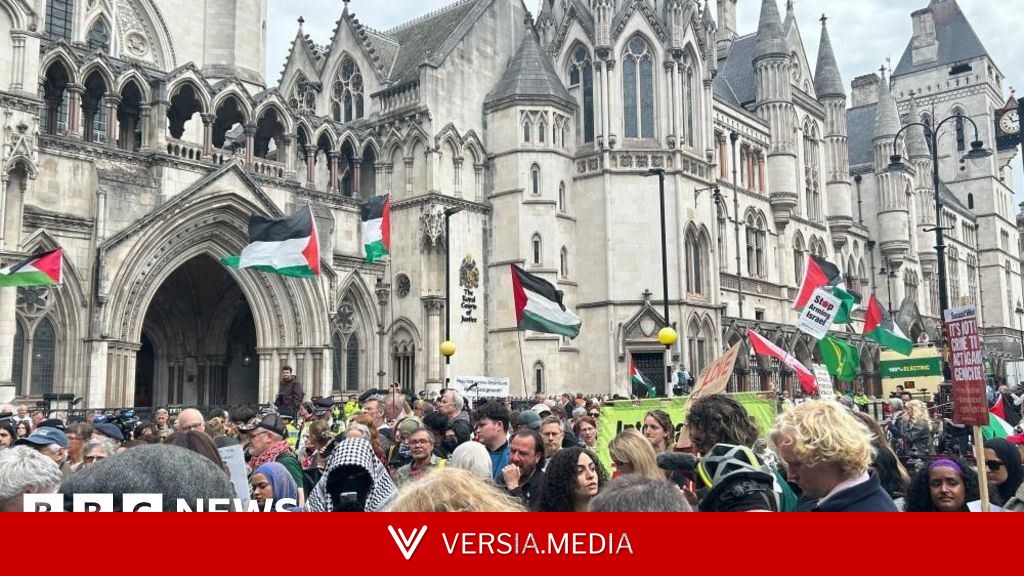
Following Monday's ruling, the Metropolitan Police stated that officers were present as people gathered outside the Royal Courts of Justice with placards supporting Palestine Action. The force reported that arrests were underway.
Home Secretary Shabana Mahmood welcomed the ruling, stating that it "does not affect lawful protest in support of the Palestinian cause," and that the actions of Palestine Action were "not consistent with democratic values and the rule of law."
She said the group had "carried out acts of terrorism, celebrated those who have taken part in those acts and promoted the use of violence," adding that it is "not an ordinary protest or civil disobedience group."