More than three months after the United States and Israel initiated their conflict with Iran, the White House and the Iranian regime have reached a preliminary agreement aimed at establishing a more enduring cessation of hostilities.
The crisis in the Middle East drove global oil prices sharply higher, as the conflict effectively shut down one of the world’s crucial maritime routes for oil, liquefied natural gas, and other essential goods, constricting worldwide supply.
However, experts caution that restoring normal shipping traffic through the Strait of Hormuz will require time, and the war’s repercussions are expected to persist in affecting the global economy for potentially several months ahead.
How quickly will the Strait of Hormuz reopen?
“Let the oil flow!” declared US President Donald Trump in a social media post celebrating the accord, which he stated would encompass the reopening of the strait for commercial shipping.
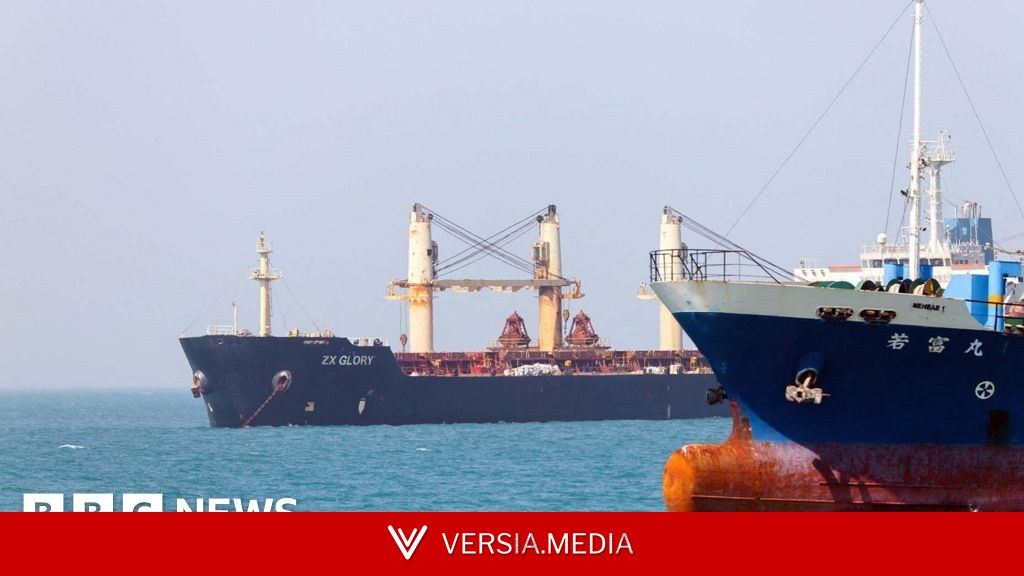
BBC Verify has been examining ship-tracking data that suggests traffic volumes in the Strait of Hormuz remain low, despite the announcement.
According to the ship-tracking website MarineTraffic, only two vessels with active location transmitters have departed the waterway since Sunday—a bulk carrier and a tanker.
The strait has been largely closed to most shipping traffic since 28 February, with only a limited number of vessels friendly to Iran permitted to traverse it.
Hundreds of ships have been stranded in the gulf, with the threat of sea mines or drone strikes heightening risks to crews and obstructing safe transit.
Neil Shearing, group chief economist at Capital Economics, noted that it remains uncertain whether the latest deal “represents a fragile truce or a durable settlement.”
He added that it is probable it will “take some time for oil flows through the Strait to return to pre-war levels.”
“Even if ships now have safe passage, tankers are in the wrong locations, oil production and refining facilities need to ramp back up to full capacity, and questions about the cost and availability of insurance for vessels navigating the Strait will persist,” he said.
Even prior to the agreement, during the ongoing ceasefire, shipping companies were largely hesitant to attempt moving their vessels out of the strait—and extracting those ships will be their initial priority.
Denmark’s Maersk, the world’s second-largest shipping line, has five vessels that have been trapped in the Gulf due to this conflict. The company stated it was too soon to evaluate how the agreement “will impact logistics,” and that for now, its operations in the region remain unchanged.
German shipping giant Hapag-Lloyd has four ships stuck in the strait and hopes to free them over the weekend, once the deal is signed and any remaining mines are cleared.
What does that mean for oil prices from here?
Normally, around one-fifth of the world’s oil and LNG supplies transit through the strait, and the effective halt to traffic has driven up oil prices. This, in turn, has had a cascading effect on the costs of petrol, diesel, and jet fuel.
During the conflict, the price of Brent crude, the global oil benchmark, peaked at roughly $120 per barrel, whereas before hostilities erupted it was just under $70.
Following news of the framework deal, Brent fell to $83.55 per barrel.
President Trump stated that the Strait of Hormuz would open once the “deal” is signed on Friday. Florence Schmit, senior energy strategist at Rabobank, said there is a “strong possibility that we’ll see a lot of volatility” in the lead-up to the deal’s signing.
“Some things are not confirmed on both sides—important things: we don’t know if the deal will be signed,” she told the BBC.
“What we’ve seen so far is a deal for 60 days for the opening of the Strait—but what happens after that? What if the Iranians want to reimpose a toll system?
“A full-scale peace agreement could still be a long way off.”
Despite this, Schmit said normality in the system, including prices, “could return by the end of the year” if a full ceasefire is reached. Normality would entail the return of pre-war levels of 26 daily crude oil tankers passing through the strait.
With the current positive news headlines and “sentiment-driven” sell-off, she said there is a chance the price could drop below $80 per barrel, but then it could average in the mid-$80s again by year’s end as “the geopolitics is stripped out” and the market assesses the reality of the situation.
What could the impact be on food prices?
Global food prices could also see relief if fertilizer supplies return closer to normal levels. Fertilizer, a by-product of oil, has seen costs skyrocket, putting pressure on farmers.
Maurizio Carulli, global energy analyst at Quilter Cheviot, said the ceasefire “should help ease the immediate pressure on fertilizer markets”—but it won’t be instantaneous.
He added that roughly a third of traded fertilizer and significant volumes of natural gas, used for nitrogen-based fertilizer, flow through the Strait of Hormuz, and that “lingering damage to energy infrastructure” will take time to repair.
“What’s more, the crop season has already begun in several parts of the world, so the resumption of deliveries of nitrogen and phosphate fertilizers will be too late for agricultural crops, which will negatively affect global produce.”
Jet fuel—another by-product of oil—traded in Northwest Europe (NWE) has already seen a slight decline in price.
NWE jet fuel is down to $1,033 per tonne, compared with $831 per tonne before the conflict, and around $1,840 at its peak.
What other effects could we see from the US-Iran deal?
The Iran war has impacted economies worldwide, as the surge in energy costs has driven up fuel prices, leading to an uptick in inflation. This has put pressure on central banks to raise interest rates to keep inflation under control.
In the UK, before the war began, the Bank of England had been widely anticipated to cut interest rates this year. But these forecasts were quickly revised as energy costs escalated, with the Bank now expected to hold rates, if not raise them later in the year.
Russ Mould, investment director at AJ Bell, said: “Just last week, markets were pricing in two rate hikes by early 2027.
“The probabilities have now shifted to just one rate hike by December and then potentially no change for at least the first half of 2027.
“That could mean companies having greater confidence to hire more people, consumers being more willing to spend money, and allow the property market to warm up after having gone cold for sellers in recent months.”
Get our flagship newsletter with all the headlines you need to start the day. Sign up here.