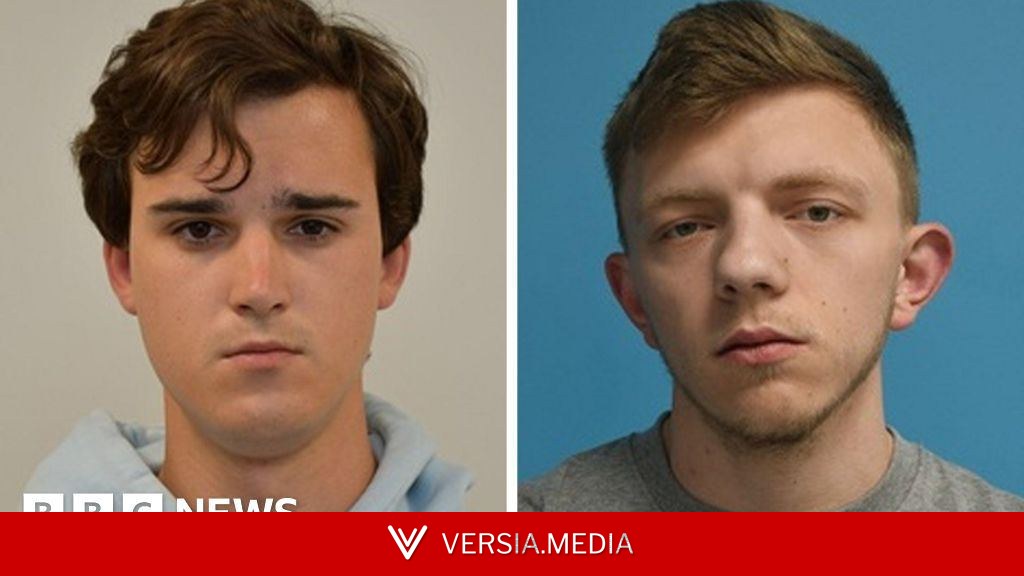
Two individuals have been convicted of plotting arson attacks targeting property and a vehicle linked to Prime Minister Sir Keir Starmer.
Ukrainian national Roman Lavrynovych, aged 22, and Stanislav Carpiuc, 27, a Romanian national born in Ukraine, were found guilty by a jury at the Old Bailey.
In May 2025, a Toyota that had formerly belonged to Sir Keir was set ablaze on a street in north London. Two days later, two homes were set on fire, including a property owned by the prime minister that was being rented to his sister-in-law.
The prosecution informed the court that Lavrynovych carried out the arson attacks after being recruited online by a Russian-speaking Telegram user known as "El Money," who offered him payment.
Lavrynovych was cleared of charges of damaging property by fire with intent to endanger life on 11 and 12 May 2025 at two properties in north London.
He was found guilty on alternative counts of damaging property by fire while being reckless as to whether life was endangered.
A third man, Petro Pochynok, aged 35, was acquitted of conspiracy to commit arson.
All three, residents of London, had denied conspiring together and "with others" to damage property by fire between 1 April and 13 May 2025.
On 8 May 2025, a car previously owned by the prime minister was discovered ablaze on a street in Kentish Town where he had once lived.
Three days later, a fire was found at flats linked to Sir Keir in nearby Islington, which he had occupied years earlier.
On 12 May 2025, a fire was discovered at the entrance of Sir Keir's Kentish Town home, which was being rented to his sister-in-law. She was inside with her family when Lavrynovych set the property alight.
Lavrynovych was recruited online by a Russian speaker using the alias EL, whom he saved in his phone as "El Money," the court heard. He had previously been tasked by "El Money" with putting up far-right posters, but never received the thousands he was promised for the arson attacks.
Prosecutors told jurors that it was "no part of your considerations" to determine who "El Money" was or what reason he might have had for coordinating the alleged actions of the defendants.
The defendants were said not to have demonstrated any particular political or ideological motivation, and it was stated that it did not matter whether they knew the property they were allegedly targeting was connected to the prime minister or whether that formed part of their motivation.
"El Money" sent messages to Lavrynovych on 12 May, after the final arson, which included "there is news, you'll get crypto" and "you need to throw away the clothes."
The Telegram contact then offered Lavrynovych advice in a message that read: "Look, you attacked the home of a very high-ranking person in Britain. I'll send you money, you need to leave the city."
Lavrynovych was arrested hours later.
During the trial in the absence of the jury, lawyers for Lavrynovych applied for prosecutors to hand over wider information held on "El Money," including whether he was associated with intelligence services or was a state informant, and where he was based. Lavrynovych's defence involved him claiming he felt intimidated by the contact and was therefore acting under duress.
"El Money's" actions were "redolent of tradecraft," meaning the techniques used by spies, the defence lawyers said.
But the judge refused the application, ruling that it was "wholly irrelevant" to the issues before the jury.
Since Lavrynovych knew nothing about any of the contact's connections, this material could only support a "retrospective assessment" that the handler posed a threat.