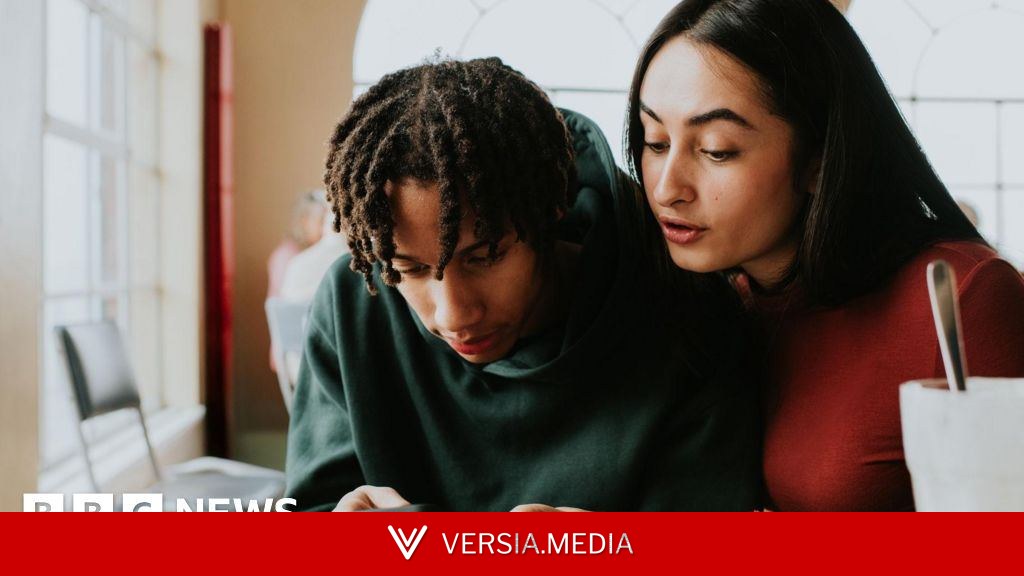
Millions of children across the UK will be prohibited from using social media following a government announcement that it intends to block under-16s from accessing various platforms.
Prime Minister Sir Keir Starmer stated that applications like TikTok, Snapchat, and Instagram will become unavailable to minors.
"We aim to pass the legislation before Christmas," he indicated, with the prohibition taking effect in the spring of 2027.
Technology firms such as Meta, Snapchat, and YouTube cautioned that a sweeping ban could drive young people toward more hazardous online spaces.
"I will not compromise on the safety and well-being of our children, which is why this ban is necessary and why it will be implemented," Sir Keir declared.
The government has not yet disclosed the complete roster of affected platforms, but confirmed that YouTube, Facebook, and X will also be subject to the restrictions.
The government stated that individuals over 16 may need to verify their ages to continue using social media services.
However, it noted that many adults would not have to undergo checks, as their accounts are already older than 16, have an associated credit card, or have their email address verified through other means.
Messaging services like WhatsApp and Signal will not be prohibited, nor will the online gaming platform Roblox.
Nevertheless, certain features will be limited for under-16s, including livestreaming and the ability for strangers to contact minors.
YouTube Kids is also excluded from the ban.
The government will also consider restrictions on certain social media functions, such as infinite scrolling and usage curfews, for 16 and 17-year-olds.
Intimate and sexual conversations with AI will also be outlawed for individuals under 18.
The prohibition follows mounting pressure from campaigners to enhance online safety for young people and aligns with a global trend of governments limiting social media access.
"This social media ban won't resolve every issue overnight, but it represents a significant step forward," said Joe Ryrie, co-founder of the Smartphone Free Childhood campaign group.
"Millions of children will now gain a few additional years to mature before entering online spaces that were never designed with their welfare in mind."
Snapchat stated it shared the goal of online safety but disagreed with an outright ban.
Meta warned that a ban risked "isolating teens from online communities and information, and pushing them toward unregulated alternatives."
YouTube noted it has numerous protections in place for teenagers and described itself as "a vital resource for young people, educators, and parents."
"Blanket bans drive children away from such curated, supervised, and beneficial experiences and toward anonymous, less secure services," its statement read.
TikTok said: "We will review the specifics of the government's measures and look forward to working constructively with the government on this important matter."
The BBC has reached out to X for a response.
Speaking in the House of Commons, Technology Secretary Liz Kendall stated that the measures would "strip power from the tech giants, who have had countless opportunities to safeguard children."
She emphasized that there was still much more to be done for both adults and children on social media, and that "today's announcement is not 'one and done' or the conclusion of the matter."
The ban was broadly welcomed by a group of bereaved parents who say their children died as a result of various harms on social media.
"I'm so relieved that this announcement has been made," Esther Ghey told BBC Breakfast.
Her daughter Brianna was killed by two teenagers in 2023. One of the perpetrators said she had become fascinated with "dark materials" online, including videos of murder and torture.
Ghey said the ban could "potentially save so many children's lives," but added that support should be available for children who will lose access to social media.
Rocio Cifuentes, the children's commissioner for Wales, described a ban as "too simplistic a framing" and argued that accountability should have been placed on platforms to make them safe for children.
Nicola Killean, the equivalent in Scotland, said the ban was not a "proportionate, effective, or enforceable way to protect children's rights," while Chris Quinn—Northern Ireland's commissioner—said the ban "risks letting technology companies off the hook."
England's children's commissioner, Dame Rachel de Souza, meanwhile, called it "positive" and suggested the ban should be extended to all children, including those up to age 18.
The government said it would use Australia's definition of social media companies when determining what to prohibit.
Australia implemented a social media ban for under-16s in December, though some research indicates children were able to circumvent the restrictions.
In April, a survey by the Molly Rose Foundation found that 61% of 12-15 year-olds with accounts on restricted platforms before the ban still had access to one or more accounts.
The online safety charity opposes the ban, instead advocating for stricter enforcement of existing online safety laws.
But Kendall said the ban was "as much about supporting future generations and resetting social norms in the future as it is about young people today."
The ban follows a three-month consultation on how to make children's use of digital technology safer, which concluded last month.
The survey received more than 116,000 responses. Some 90% of parents who responded supported a social media ban for under-16s, with over 83% saying the benefits of social media were outweighed by the risks.
The ban is being monitored by youth advocates and lawyers in the US, where most social media companies are headquartered.
Mark Lanier—who successfully litigated a landmark trial against Meta and YouTube earlier this year, finding the tech giants liable for designing their platforms to be addictive—said "we know we can't trust the companies to self-police effectively," adding that the UK ban was "a step in the right direction."
The Trump administration has not responded to the announcement, but earlier this month, the US State Department said it welcomed the opportunity to contribute to the UK's consultation and called protecting children online "a top priority."
Rather than outright bans, the administration prefers encouraging what it calls "healthy options," such as incentivizing platforms to offer chronological feeds over algorithmic ones and imposing time limits on usage.
"We have concerns about regulations that impose disproportionate compliance burdens on American companies or that apply to one platform but not similar services," the US Mission to the UK said in a statement dated 5 June.
Sign up for our Tech Decoded newsletter to follow the world's top tech stories and trends. Outside the UK? Sign up here.