When you purchase through links on our site, we may earn an affiliate commission. Here’s how it works .
Copy link
One of the tenets of any classic World Cup is the presence of a plucky underdog that upsets the odds and makes a deep run into the latter stages of the tournament.
In 2002, co-host South Korea played this role, as they became the first Asian side to reach the World Cup semi-finals.
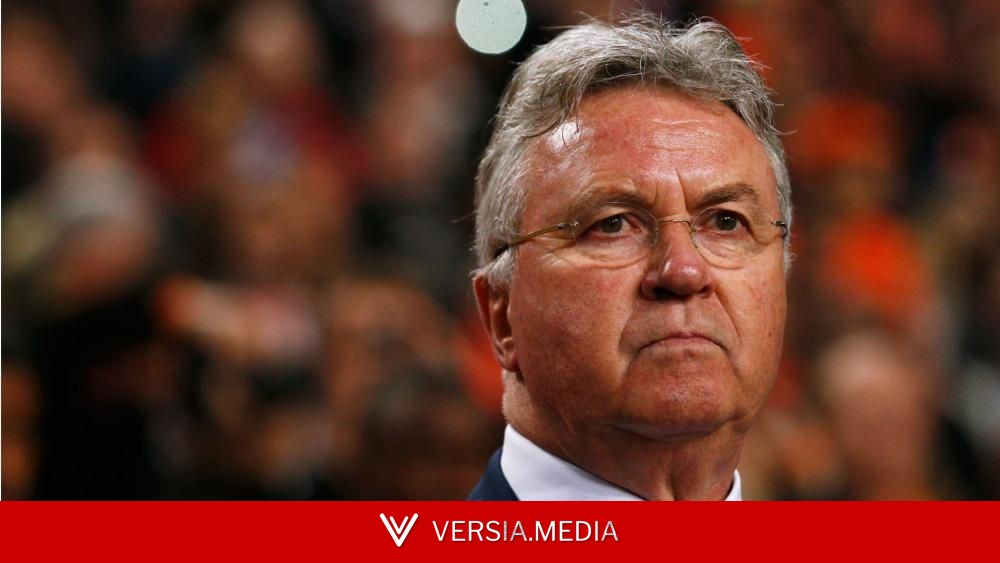
This upstart run was masterminded by Dutch coach Guus Hiddink , who was able to learn on a unique source of motivation ahead of the biggest match in South Korean history.
Hiddink on motivating South Korea’s 2002 World Cup stars
“Before the quarter-final against Spain , there was a special moment,” Hiddink recalls to FourFourTwo . “In the run-up to the World Cup, I’d met the president of South Korea, Kim Dae-jung. I had nicknames for a lot of my players and staff.
“Many of them were named Kim, Choi, Lee or Park. I had a driver named Kim, so he became Driver Kim. There was a Kim who had previously worked in Germany, so he became German Kim. That’s how it went.
“The president’s name was also Kim. He had endured a lot before becoming president. He’d been in the opposition when South Korea was still not yet a democracy, and had survived several assassination attempts.
“That made him walk somewhat slowly, so I thought, ‘I’ll call him Slow Kim.’ When I mentioned this to him, the people around him all looked at me like, ‘How can you say that?’
The best features, fun and footballing quizzes, straight to your inbox every week.
“But he laughed. He had a sense of humour. He never spoke in English publicly, but he did with me.”
With Hiddink building bridges with his new associates, he was soon able to get a better understanding of South Korean society and what success at a World Cup might mean for his players.
“I’d heard that South Korean Olympians who won a gold medal were exempt from the country’s mandatory military service – South Korea and North Korea are still technically at war,” he continues. “I thought, ‘For the World Cup, should I see if the same could apply to our players if we reach the semi-finals?’ I didn’t expect it to happen, but still.
“There wasn’t a clear answer until a day before the quarter-final against Spain. During training, the interpreter came over to me and said: “Mister, the president wants to speak with you.” I was handed a phone. Slow Kim said: “If you beat Spain, all the boys will be exempt from military service.”
“I told the players after training and they couldn’t believe it. They huddled together and started crying one by one – really crying.
“For them, it was a huge deal, especially if you want to become a professional footballer in Europe. The president kept his word.”
You must confirm your public display name before commenting
Please logout and then login again, you will then be prompted to enter your display name.
1 ‘When I look at Raheem Sterling, the amount of tap-ins he scored, just because he was in that position, that’s something I really look up to’ How Jeremy Doku has been inspired by the former England man
2 The Big Portugal Football Quiz: Can you get 20 correct answers?
3 ‘For me to be able to score in Stuttgart, and celebrate the same way my father did there, is the highlight of my career so far’ Mikel Merino on following in his father’s footsteps at Euro 2024
4 Manchester United compensation figure revealed after World Cup injury
5 World Cup Wordsearch: Heroes of the 1980s